
Finding Your Perfect Match: How to Choose the Right Surf Ski

Updated: Jun 8
One of the most common questions I get asked – whether it's from a complete beginner standing on the beach for the first time, or an experienced paddler looking to make their next upgrade – is some version of the same thing: "What ski should I get?"
It's a deceptively simple question. The honest answer is: it depends. It depends on you – your experience, your body, your lifestyle, where you paddle, and most importantly, what you actually want to get out of the sport. After 25 years of racing at an elite level and coaching athletes from absolute beginners through to national champions, I've seen every type of paddler make every type of mistake when buying a ski. This guide is here to help you avoid those mistakes.
Let's walk through the key factors you need to think about before you buy.
1. Stability: Be Honest With Yourself
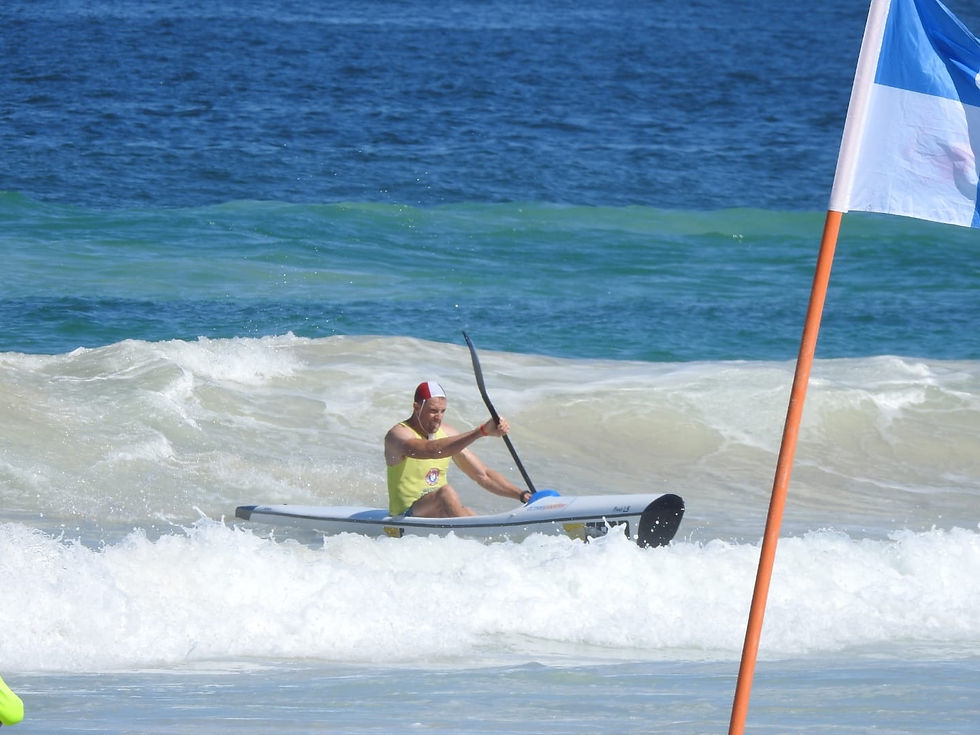
Stability is the first – and I would argue the most important – factor for any paddler who isn't already racing at an elite level. Surf skis are categorised broadly by their hull width and rocker profile, which determines how stable or 'tippy' they feel on the water.
At the stable end of the spectrum you'll find skis sometimes called 'beginner' or 'intermediate' skis – wider hulls, more forgiving, and far less likely to send you into the water every five minutes. At the other end you have elite racing skis: narrow, fast, and utterly unforgiving if your technique isn't dialled in. The fastest ski on paper is completely useless if you spend more time swimming than paddling.
My strong advice: err on the side of more stability than you think you need. I've watched countless paddlers – strong, fit athletes who are confident in the water – jump on a narrower ski too early and spend months fighting the boat instead of developing their technique. A more stable platform lets you focus on your stroke, your posture, and your connection with the water. Those fundamentals will make you faster on any ski.
A useful rule of thumb: if you're new to surf skiing, look for a ski with a beam (width) of at least 50–53cm. As your balance and technique improve, you can progress to narrower hulls. Think of it like learning to drive – you don't start in a Formula 1 car.
2. Length: Speed vs. Manoeuvrability
Surf ski length typically ranges from around 5.5 metres to 6.5 metres or more for elite open-class boats. Length affects two things primarily: speed and manoeuvrability.
Longer skis generally have a higher hull speed – they glide more efficiently through flat water and can surf downwind runs more effectively. This is why elite paddlers typically race on the longest boat allowed under competition rules. However, longer skis can be harder to turn and less responsive when you're surfing in dynamic ocean conditions.
Shorter skis are more agile and easier to manage for beginners. They're also easier to transport and store – which matters more than people realise when they're living in a suburban house rather than right on the beach.
For most recreational paddlers and surf lifesaving members, a ski in the 5.8–6.1m range hits the sweet spot: fast enough to be competitive and rewarding, manageable enough to not be a constant battle. If you're specifically aiming for state or national competition, you'll eventually want to move to a full-length open ski – but only once you're genuinely ready for it.
3. Storage: Where Is This Thing Actually Going to Live?

This is the factor most people don't think about until after they've bought the ski and are standing in their driveway wondering what to do with a 6-metre piece of fibreglass.
Surf skis are long, and depending on the construction, they can be delicate. Leaving a ski stored incorrectly – lying on a hard surface, leaning against a wall unsupported, or left in direct sun for extended periods – can warp or damage the hull over time. A proper wall-mounted or free-standing ski rack is a worthwhile investment and should be factored into your budget.
Think about your living situation. Do you have a garage? A shed? Can you store the ski at your surf club? Some clubs have rack storage available for members, which takes the hassle out of home storage entirely. If you're apartment-dwelling or short on space, a shorter ski or a more robust construction may be the pragmatic choice over a high-performance race ski that needs to be handled with kid gloves.
Also consider transport. Will you be putting this on a roof rack? In a trailer? Most full-size skis will require a roof rack setup on your car, make sure yours is appropriate for the length and weight of the ski before you buy.
4. Weight: Don't Underestimate It
Surf ski weight varies enormously depending on construction material. At the heavy end, fibreglass/polyester skis can weigh 14–18kg. Mid-range epoxy/fibreglass layups come in around 10–13kg. High-performance carbon or carbon/Kevlar race skis can be as light as 8–10kg.
Weight matters in two distinct ways: on-water performance and off-water handling. On the water, a lighter ski will accelerate more quickly, respond faster, and generally feel more lively. In downwind conditions, where you're trying to catch and link small runs, a lighter ski can make a noticeable difference. That said, the performance gap between a mid-weight and a light ski is far less significant than the gap between correct technique and poor technique. A lighter ski doesn't make a bad paddler fast.
Off the water, weight is purely about practicality. Can you comfortably lift this ski on and off your roof rack by yourself? Can you carry it from your car to the water without straining? I've seen smaller-framed paddlers buy heavier skis that are technically good choices on paper, only to find that handling the ski out of the water becomes a chore that chips away at their enjoyment of the sport.
Budget permitting, lighter is almost always better. If budget is a constraint, a mid-weight ski you can actually manage comfortably is better than a light ski that's a struggle every time you use it.
5. Your Goals and Ambitions: The Most Important Question of All

Everything above matters, but nothing matters more than this: what do you actually want from surf skiing?
If your answer is "I want to get out on the water, enjoy the ocean, and get fit," then you need a fundamentally different ski to someone who says "I want to compete at state level within two years." And both of those paddlers need something different again from someone who says "I want to race Aussies and I'm prepared to do whatever it takes."
Be honest about where you are right now, not just where you want to be. The best equipment in the world won't shortcut the fundamentals. What it will do is either support or hinder your development at each stage.
For recreational paddlers: a stable, mid-length ski in the 11–13kg range in fibreglass or epoxy construction will serve you brilliantly. In the Fenn range, the Fenn Bluefin is the gold standard here – exceptionally stable, confidence-inspiring for new paddlers, and built to last. It's the ski I recommend to virtually every adult just starting out.
For developing competitors: this is where the Fenn Spearfish (heavier paddlers) and Sailfish (lighter paddlers) really shines. It sits perfectly in the intermediate bracket – fast enough to be genuinely competitive at club, state, and age group level, but forgiving enough that it won't punish you while your technique is still developing. It's one of the most popular skis in WA for good reason.
For serious competitors: at the elite end, the Fenn Wahoo (heavier paddlers) and Fenn Cuda (lighter paddlers) are purpose-built race machines. Carbon construction, narrow hulls, and tuned for absolute speed. At this level the choice comes down to your body shape, paddling style, and the conditions you race in most. If this is you, come and talk to me before you spend $4,000–$6,000 on a ski – getting the right fit matters enormously at this end of the market.
6. Beyond the Surf Carnival: Ocean Paddling and Downwind
One thing I always encourage paddlers to consider is whether they want to explore the broader world of ocean racing beyond the surf life saving calendar. Events like Drummers Downwind, the Doctor (the famous Perth-to-Rottnest downwind), and a growing range of ocean races around WA open up a completely different dimension of the sport.
Downwind paddling in particular is one of the most exhilarating things you can do on a ski. Catching a run – where the wind and swell align and you feel the ski accelerate under you, linking from one wave to the next – is genuinely addictive. It's also a skill that takes time and the right conditions to develop.
If you're drawn to this side of the sport, the Fenn XTS is worth a serious look – it's a solid downwind performer in the Fenn range, with a rocker profile and hull shape that really comes alive in open ocean conditions. It's not the fastest ski on flat water, but put it in a downwind run and it's exceptional.
New vs. Second-Hand
For beginners and developing paddlers, the second-hand market is your best friend. A well-looked-after fibreglass ski that's a few years old can be an absolute bargain – you get to learn and progress on a good piece of equipment without the heartbreak of putting the first ding in a brand-new boat. The surf ski community in WA is tight-knit and there's always good second-hand equipment changing hands. Ask around at your club.
When buying second-hand, always inspect the hull carefully for cracks, repairs, and any soft spots that might indicate water ingress into the foam core. A few cosmetic scratches are nothing to worry about – structural damage is another matter entirely.
Try Before You Buy: Demo a Fenn with Me
As the Fenn retailer for Western Australia, I stock and can order the full Fenn range – from the Wahoo all the way through to the Bluefin. But more importantly, I can put you on the water in any ski you're considering before you commit to buying.
Nothing in this guide, or any guide, replaces the experience of actually sitting in a ski and feeling how it moves under you. Every paddler is different: different height, different weight, different centre of gravity, different stroke style. The ski that works brilliantly for one person might not suit another at all. A demo takes the guesswork out of one of the biggest purchasing decisions you'll make in this sport.
If you're in WA and keen to get on a Fenn, reach out through the Paddle Collective and we'll get something sorted.
Final Thoughts
Choosing the right ski is one of the most impactful decisions you'll make as a paddler. Get it right and the boat will feel like an extension of yourself within a few months. Get it wrong and it becomes an obstacle between you and enjoying the sport.
My overall advice: be honest about your current ability, think practically about your lifestyle (storage, transport, handling), match the boat to your goals rather than your aspirations, and don't rush the process. There is no single 'best' ski – there is only the best ski for you, right now, at this stage of your paddling journey.
And if you're ever in doubt, come down to Trigg and have a chat. Nothing beats getting on the water and trying a few different boats before you commit. The Trigg ski squad is one of the most welcoming and experienced communities in WA surf sports, and we're always happy to help a paddler find their perfect match.
See you on the water.
Reece Baker
New to the sport? Start with our complete beginner's guide: Learn to Surf Ski in Perth: A Beginner's Guide.


Comments